Ganga Mata
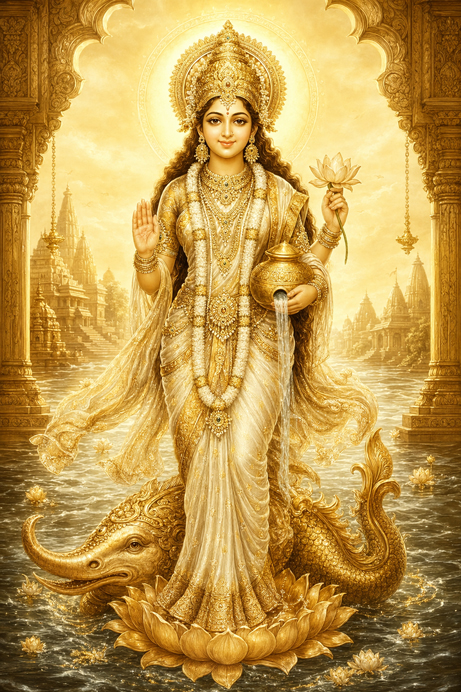
Ganga Mata is worshipped as the sacred river goddess whose remembrance symbolizes purification, divine grace, and spiritual upliftment.
Simple Ganga Mantra
Om Shri Gangayai Namah
Day
Monday
Color
White
Bhog
Fruits
Choose Reading Section
Select one section and continue your paath in focused reading mode.
Quick Facts
Primary Essence
Purity, grace, and the aspiration for liberation
Famous Legend
Bhagiratha's penance and Ganga's descent through Shiva's locks
The Story and Significance of Ganga Mata
A clear devotional introduction for readers searching for meaning, worship practice, and available paath.
Ganga Mata is worshipped as the sacred river goddess whose remembrance symbolizes purification, divine grace, and spiritual upliftment.
The Story of Maa Ganga
Maa Ganga, also known as Ganga Maiya, Bhagirathi, Jahnavi, Tripathaga, and Devanadi, is revered in Hinduism as the supreme goddess of purity, liberation, compassion, and divine grace. She is believed to have emerged from the feet of Lord Vishnu and resides in the sacred locks of Lord Shiva. Maa Ganga is known as the destroyer of sins, the giver of liberation, and the sustainer of life. Her waters are believed to purify not only the body but also the soul. Devotees worship her as the holiest river, a divine mother, and a direct path to spiritual liberation.
The story of Ganga's descent begins with King Sagara and his sixty thousand sons. During the Satya Yuga, the mighty King Sagara performed the Ashwamedha Yajna. As the sacrificial horse wandered, it reached the netherworld, where Indra secretly tied it near the hermitage of Sage Kapila. Sagara's sixty thousand sons searched for the horse and eventually found it there. Mistakenly believing Kapila to be the thief, they insulted the sage. Enraged, Sage Kapila reduced all sixty thousand princes to ashes with a single glance. Their souls remained trapped without attaining liberation.
King Sagara's grandson Anshuman and later his son Dilipa performed severe penances to liberate their ancestors, but neither succeeded. Finally, Dilipa's son Bhagiratha vowed to bring the heavenly Ganga to Earth and redeem his forefathers. He undertook intense austerities to please Lord Brahma. Pleased with his devotion, Brahma granted that Ganga would descend to Earth. However, her force was so immense that the Earth would not be able to withstand it directly.
Bhagiratha then prayed to Lord Shiva and requested him to receive Ganga in his matted locks. Shiva accepted. When Ganga descended from heaven, she was proud of her immense power and thought she could sweep Shiva away. Instead, Shiva trapped her within his dense locks. Ganga remained entangled there until Bhagiratha again prayed to Shiva. Pleased, Shiva released a single stream from his hair, allowing Ganga to flow down from the Himalayas onto Earth. For this reason, Lord Shiva is known as Gangadhara—the bearer of Ganga.
Choose Reading Section
Select one section and continue your paath in focused reading mode.