Jagannath Ji
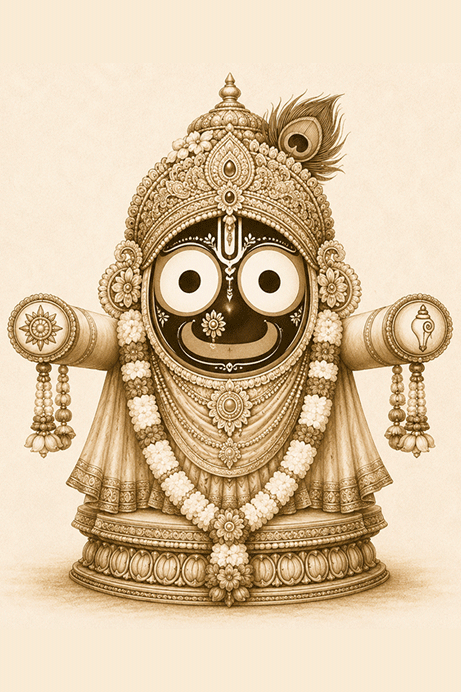
Jagannath Ji is worshipped as the Lord of the Universe, a compassionate form of Lord Krishna who accepts all devotees with equal love and grace.
Jagannath Mool Mantra
Om Jagannathaya Namah
Day
Thursday
Color
Yellow
Bhog
Fruits
Festivals
Jagannath Rath Yatra
Janmashtami
Choose Reading Section
Select one section and continue your paath in focused reading mode.
Quick Facts
Primary Essence
Universal compassion, devotion, divine love, protection, and spiritual liberation
Sacred Associations
Puri Dham, Rath Yatra, Balabhadra, Subhadra, Sudarshana Chakra, Mahaprasad, and Lord Krishna
The Story and Significance of Jagannath Ji
A clear devotional introduction for readers searching for meaning, worship practice, and available paath.
Jagannath Ji is worshipped as the Lord of the Universe, a compassionate form of Lord Krishna who accepts all devotees with equal love and grace.
The Story of Jagannath Ji
Jagannath Ji is revered as the Lord of the Universe and is one of the most beloved forms of Lord Vishnu and Lord Krishna. He is worshipped primarily in the sacred city of Puri in Odisha, where millions of devotees visit every year to seek his blessings. Jagannath means 'Lord of the Universe,' signifying that the Lord belongs to everyone without distinction of caste, community, nationality, or status.
The worship of Shri Jagannath has ancient roots and combines Vedic, Vaishnava, tribal, and devotional traditions. Lord Jagannath is worshipped together with his elder brother Lord Balabhadra and his sister Devi Subhadra. Their unique wooden forms are installed in the famous Jagannath Temple of Puri, one of the holiest pilgrimage sites in India.
According to a popular legend, King Indradyumna of Malwa desired to have darshan of the divine form of Lord Vishnu known as Nila Madhava. After a long search, the king learned of the Lord's mysterious presence in a forest shrine. When he reached the sacred location, the deity had disappeared, but he received divine instructions to build a grand temple and establish the Lord's worship there.
The Lord later appeared in the form of sacred wooden logs known as Daru Brahma, which floated to the shore. Lord Vishwakarma, disguised as a carpenter, agreed to carve the divine forms under the condition that he would not be disturbed during his work. However, before the work was completed, the king opened the door. The divine forms appeared unfinished, with large eyes and incomplete limbs. A heavenly voice declared that this was the form in which the Lord wished to be worshipped. Thus emerged the unique forms of Jagannath, Balabhadra, and Subhadra.
Choose Reading Section
Select one section and continue your paath in focused reading mode.