Rani Sati Dadi
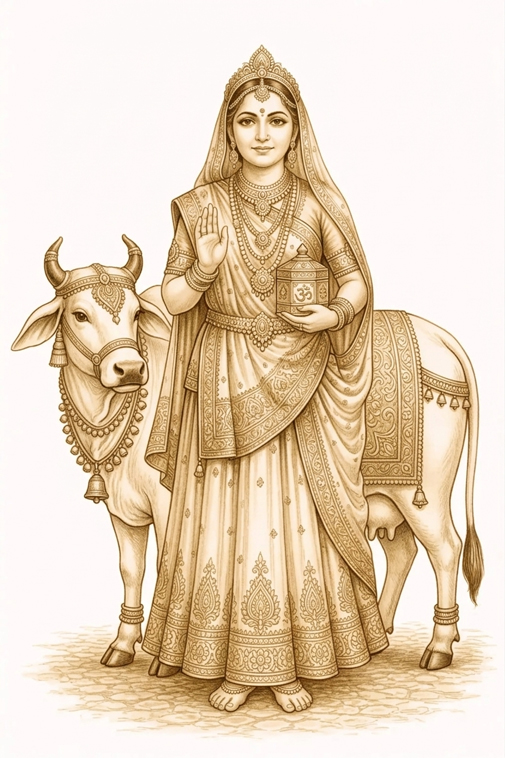
Rani Sati Dadi is especially revered in Rajasthan and among Marwari families as a grandmotherly mother figure who symbolizes courage, dignity, family protection, and blessings.
Mool Mantra
Om Shri Rani Sati Dadiyai Namah
Day
Friday
Color
Sindoor Red
Bhog
Fruits
Choose Reading Section
Select one section and continue your paath in focused reading mode.
Quick Facts
Primary Essence
Protection, courage, family welfare, and patience during difficult times
Important Consideration
Modern devotion to Rani Sati Dadi should not be interpreted as support for the historical practice of sati
The Story and Significance of Rani Sati Dadi
A clear devotional introduction for readers searching for meaning, worship practice, and available paath.
Rani Sati Dadi is especially revered in Rajasthan and among Marwari families as a grandmotherly mother figure who symbolizes courage, dignity, family protection, and blessings.
The Story of Rani Sati Dadi
Rani Sati Dadi, also affectionately remembered as Dadi Ji, Narayani Devi, and the Divine Mother in the form of Shakti, is especially revered in Rajasthan, Haryana, and among the Marwari community. She is regarded as a symbol of courage, devotion, sacrifice, loyalty, and inner strength. Devotees worship her as a protective maternal force who safeguards families, removes difficulties, and fulfills sincere wishes.
According to traditional folklore and ancient narratives, the previous birth of Rani Sati Dadi is associated with the era of the Mahabharata. It is believed that she was born as Uttara, the daughter of King Virata and the wife of Abhimanyu. After Abhimanyu attained martyrdom in the Kurukshetra war, Uttara was overwhelmed with grief. Pleased by her devotion and dedication, Lord Krishna blessed her, saying that in the age of Kali she would be worshipped as a great divine power.
In the age of Kali, she is believed to have been born as Narayani Devi in a respected Agrawal family in Rajasthan. From childhood, she was known for her righteousness, courage, and virtuous nature. She was married to a brave and noble man named Tandan Ji. Their life together was filled with love, respect, and religious values.
According to the popular legend, Tandan Ji possessed a rare and beloved horse. The son of a local ruler attempted to seize the horse by force. When Tandan Ji opposed this act, the dispute escalated and eventually led to a confrontation.
Choose Reading Section
Select one section and continue your paath in focused reading mode.