Tulsi Mata
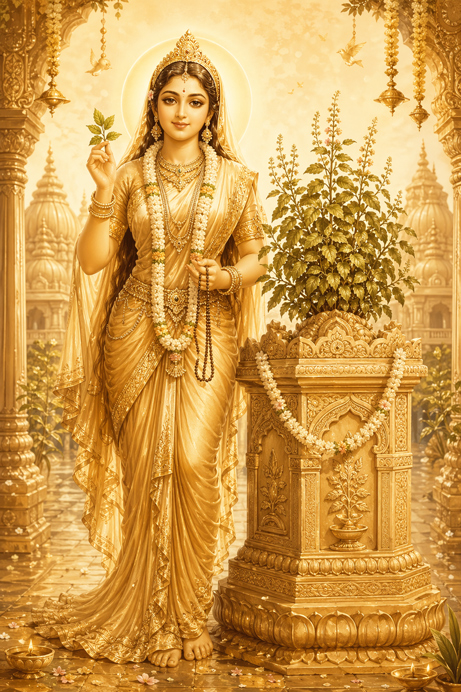
Tulsi Mata is worshipped as the divine embodiment of the sacred Tulsi plant and is regarded as the foundation of Vishnu devotion and household auspiciousness.
Simple Tulsi Mantra
Om Shri Tulasyai Namah
Day
Thursday
Color
Green
Bhog
Panchamrit
Choose Reading Section
Select one section and continue your paath in focused reading mode.
Quick Facts
Primary Essence
Purity, devotion to Lord Vishnu, and sanctity of the home
Living Symbol
The sacred Tulsi plant worshipped in homes across India
The Story and Significance of Tulsi Mata
A clear devotional introduction for readers searching for meaning, worship practice, and available paath.
Tulsi Mata is worshipped as the divine embodiment of the sacred Tulsi plant and is regarded as the foundation of Vishnu devotion and household auspiciousness.
The Story of Maa Tulsi
Maa Tulsi, also known as Vrinda, Vishnupriya, Haripriya, and Tulsi Mata, is revered in Hinduism as the supreme goddess of devotion, purity, service, and divine love. She is considered the dearest to Lord Vishnu, and worship of Vishnu is traditionally regarded as incomplete without Tulsi. Maa Tulsi is known as the queen of medicinal herbs, the giver of liberation, and the protector of the household. Her touch, sight, and service are believed to remove sins and bring prosperity and well-being into the home. Devotees worship her as an embodiment of Goddess Lakshmi, the beloved of Lord Vishnu, and a gateway to liberation.
One tradition connects the origin of Tulsi with the Samudra Manthana (Churning of the Ocean). As the gods and demons churned the cosmic ocean, many divine treasures and celestial beings emerged. At that time, a radiant divine energy manifested through the will of Lord Vishnu and appeared as Tulsi. Lord Brahma named her Tulsi, meaning 'the incomparable one.' The gods praised her, and Lord Vishnu accepted her as his beloved. Since then, Tulsi has been regarded as especially dear to Lord Vishnu.
Another sacred account, found in the Skanda Purana, tells of a righteous king named Dharmadhvaja and his virtuous wife Madhavi. They were blessed with a divine daughter who became a devoted worshipper of Lord Vishnu from childhood. Through severe penance and unwavering devotion, she pleased Lord Vishnu and sought him as her eternal companion. Pleased with her devotion, he granted her wish. This divine maiden later became renowned throughout the world as Tulsi.
One of the most important legends associated with Tulsi is the story of Vrinda and the demon king Shankhachuda. Shankhachuda was a mighty being protected by a divine boon, while his wife Vrinda was a devoted and virtuous follower of Lord Vishnu. As long as Vrinda's chastity remained intact, Shankhachuda could not be defeated. The gods appealed to Lord Vishnu for help. Vishnu assumed the form of Shankhachuda, causing Vrinda's protective spiritual power to be broken. Thereafter, Lord Shiva was able to defeat Shankhachuda in battle.
Choose Reading Section
Select one section and continue your paath in focused reading mode.